|
|
|
|

|
An inclusive community advocating for learners with gifted education needs, their families, and educators
|
|
|
|
|
Dear GiftedNYS Community,
|
As we welcome June and celebrate Pride Month, this edition of our newsletter is dedicated to supporting the intersectional experiences of our gifted and twice exceptional (2e) LGBTQIA+ learners.
|
We know that being gifted or 2e often comes with a deep sense of feeling different from peers. For students who are also exploring or identifying as LGBTQIA+, that sense of difference can be magnified—especially during such a formative time in their development. These students may face increased vulnerability, but with the right support, they can also experience a profound sense of belonging, confidence, and strength.
|
Whether you are a teacher, parent, family member, or friend, your words and actions have the power to create safe, affirming spaces where LGBTQIA+ gifted and 2e youth feel seen, supported, and valued. From subtle shifts in language, to creating affirming spaces we hold tremendous power to make a difference.
|
In this issue, we’ve gathered articles and resources designed to help you better support LGBTQIA+ gifted and 2e learners. Our hope is that these tools offer insight, spark conversation, and inspire advocacy. Together, by listening, learning, and showing up with care, we can ensure that every gifted learner has the freedom to be their authentic self.
|
|
|
|
|
|
Congratulations to all Graduates!
|
|
|
|
|
Advocacy Corner
|
Supporting our Gifted LGBTQIA+ Learners:
Advice from Kevin Jennings
|
|
|
|
We were honored to speak with LGBTQIA+ advocate Kevin Jennings, CEO of Lambda Legal, about how to best support gifted and 2e LGBTQIA+ students. Kevin’s advocacy began in 1988 when he helped launch the first school-based Gay-Straight Alliance and later founded Gay, Lesbian and Straight Education Network (GLSEN), which he led for 18 years. In this edition, he shares his insights on the current landscape for LGBTQIA+ youth and offers practical advice on how we can support them every day.
|
|
|
|
The State of LGBTQIA+ Youth
Recent data shows the state of LGBTQIA+ youth in the United States today is marked by significant mental health challenges. While some aspects of LGBTQIA+ rights have improved from previous decades, Kevin believes the experiences of LGBTQIA+ youth are in some ways worse now in daily life. Data from the GLSEN National School Climate Survey, and the Trevor Project U.S. National Survey on the Mental Health of LGBTQIA+ Young People show that schools nationwide are hostile environments for a distressing number of LGBTQIA+ students, the overwhelming majority of whom routinely hear anti-LGBTQIA+ language and experience victimization and discrimination at school. LGBTQIA+ youth are at higher risk for suicide, mental health challenges and bullying. In addition, the adoption by some states of “Don’t Say Gay or Trans laws” prohibit discussion of LGBTQIA+ issues in school. While this may cause alarm, there is much we can do collectively and on an individual basis to create affirming spaces and relationships to support LGBTQIA+ youth.
|
Advocacy and Support
Kevin advises that it is important to first distinguish between homophobia (active bigotry over someone’s sexual orientation or gender identity) versus heterosexism (the assumption people make that others are heterosexual or cisgendered). Heterosexism, or unconscious bias, is the place that the majority of us reflect on and improve our own affirming language and actions. For example, language often communicates the assumption that everyone is heterosexual and cisgendered. When we say things like “When you grow up and meet the right girl” versus “When you grow up and meet the right partner to love” we send a signal to children about what is preferred or what is possible. These subtle shifts, or what Kevin called “distinguishing behaviors” are what sends a signal to a child that a person or space is affirming. According to Kevin, “Every disenfranchised group, whether it be BIPOC people or religious minorities, or queer people, etc.. assumes that the majority just doesn't ‘get it’. You have to distinguish yourself by your behavior so that people will see that you are someone who ‘gets it’.”
|
He believes that one of the most important things parents can do is to think about how they can engage in distinguishing behaviors that signal to their child that if this is their child’s experience, their parents will be there for them. Little things that might not seem like a big deal to a parent, could be like a flashing green light to a young person that they can open up, share and be themselves at home. It is also important to note that these distinguishing behaviors are important whether or not a parent may think their child is LGBTQIA+. Young straight people need to see role models of non-heteronormative adults, and parents can be role models for their children whether they are straight or LGBTQIA+.
|
|
This advice holds true for teachers as well. Educators may not have much control over what happens in the hallways, bathrooms, in locker rooms, online, etc… but they can create a safe and affirming culture in the spaces they do control. Engaging in distinguishing behaviors, as subtle as they may seem, communicates to disenfranchised people that you are a person who sees them, who understands, and affirms their identity. Kevin believes that advocacy and activism is far more simple than we often think. For him, it is the small everyday actions that kids notice the most, and make the most impact on the children we engage with. To end our conversation, he shared one of his favorite quotes by Eleanor Roosevelt from a speech to the UN Commission on Human Rights, expressing that our small actions, in the spaces we share with others, can have the most impact.
|
“Where, after all, do universal human rights begin? In small places, close to home – so close and so small that they cannot be seen on any maps of the world. Yet they are the world of the individual person; the neighborhood he lives in; the school or college he attends; the factory, farm, or office where he works. Such are the places where every man, woman, and child seeks equal justice, equal opportunity, equal dignity without discrimination. Unless these rights have meaning there, they have little meaning anywhere. Without concerted citizen action to uphold them close to home, we shall look in vain for progress in the larger world.” --Eleanor Roosevelt
|
|
|
|
|
|
Featured Event
|
|
|
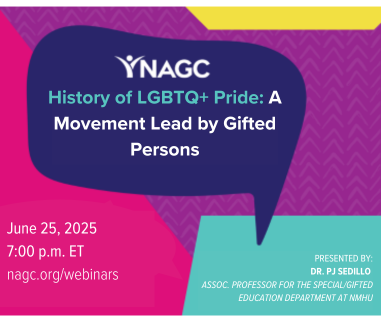
June 25, 2025 | 7:00 p.m. ET
|
Hosted by NAGC
Free & Open to All
|
|
|
|
|
|
|
Finding reliable, meaningful information is essential to supporting LGBTQIA+ learners. To help, we've gathered thoughtful resources from the National Association for Gifted Children (NAGC) and trusted LGBTQIA+ advocacy organizations. Our hope is that these tools offer encouragement,
|
|
|
|
|
connection, and guidance for gifted LGBTQIA+ students and those who stand beside them.
|
|
|
The National Association of Gifted Children has provided some great resources, and continues to add to the body of research on the intersection of LGBTQIA+ and gifted learners. In particular, there is an issue of the NAGC Select Series called Needs and Approaches for Educators and Parents of Gifted Gay, Lesbian, Bisexual and Transgender Students. In addition, the NAGC has compiled a comprehensive list of references and resources called the LGBTQ Diversity Toolbox for Parents, including peer reviewed research, memoirs and links to advocacy organizations. Many incredible organizations exist to support, inform, and connect LGBTQIA+ individuals and allies. We’ve gathered a few to help you take the next step.
|
|
Founded in 1990 by educators, GLSEN works to ensure all K–12 students are valued and respected, regardless of sexual orientation, gender identity, or expression. They support student-led movements, conduct original research to drive evidence-based solutions, and coordinate a network of 43 chapters across 30 states. With thousands of GSAs nationwide, GLSEN empowers students to lead change in their schools and communities.
|
The Trevor Project is the leading suicide prevention and crisis intervention nonprofit organization for LGBTQIA+ young people, providing 24/7 support to LGBTQIA+ young people. Through their website, anyone can reach out to a counselor if they are struggling, find answers and information, and get the resources to help someone else.
|
PFLAG is the nation's largest organization dedicated to supporting, educating, and advocating for LGBTQ+ people and those who love them.Founded in 1973 by a mother and her gay son, PFLAG was born from the unified front of a family leading with love. PFLAG’s network of more than 325,000 members and supporters are helping create an equitable and inclusive world where every LGBTQ+ person is safe, celebrated, empowered, and loved.
|
Founded in 1985, GLAAD is a non-profit organization focused on LGBTQ advocacy and cultural change. As the world’s largest LGBTQ media advocacy organization, GLAAD works to increase media accountability and community engagement to ensure authentic LGBTQ stories are seen, heard, and actualized.
|
|
It Gets Better is a global nonprofit that uplifts, empowers, and connects LGBTQ+ youth, envisioning a world where they live freely, feel connected, and know their worth. Centered on storytelling, the organization shares messages of hope that inspire, spark dialogue, and support identity journeys. Through It Gets Better EDU, they reach thousands of middle and high school students with a youth ambassador program, student-led grants, and free resources for educators and student leaders.
|
|
|
|
|
|
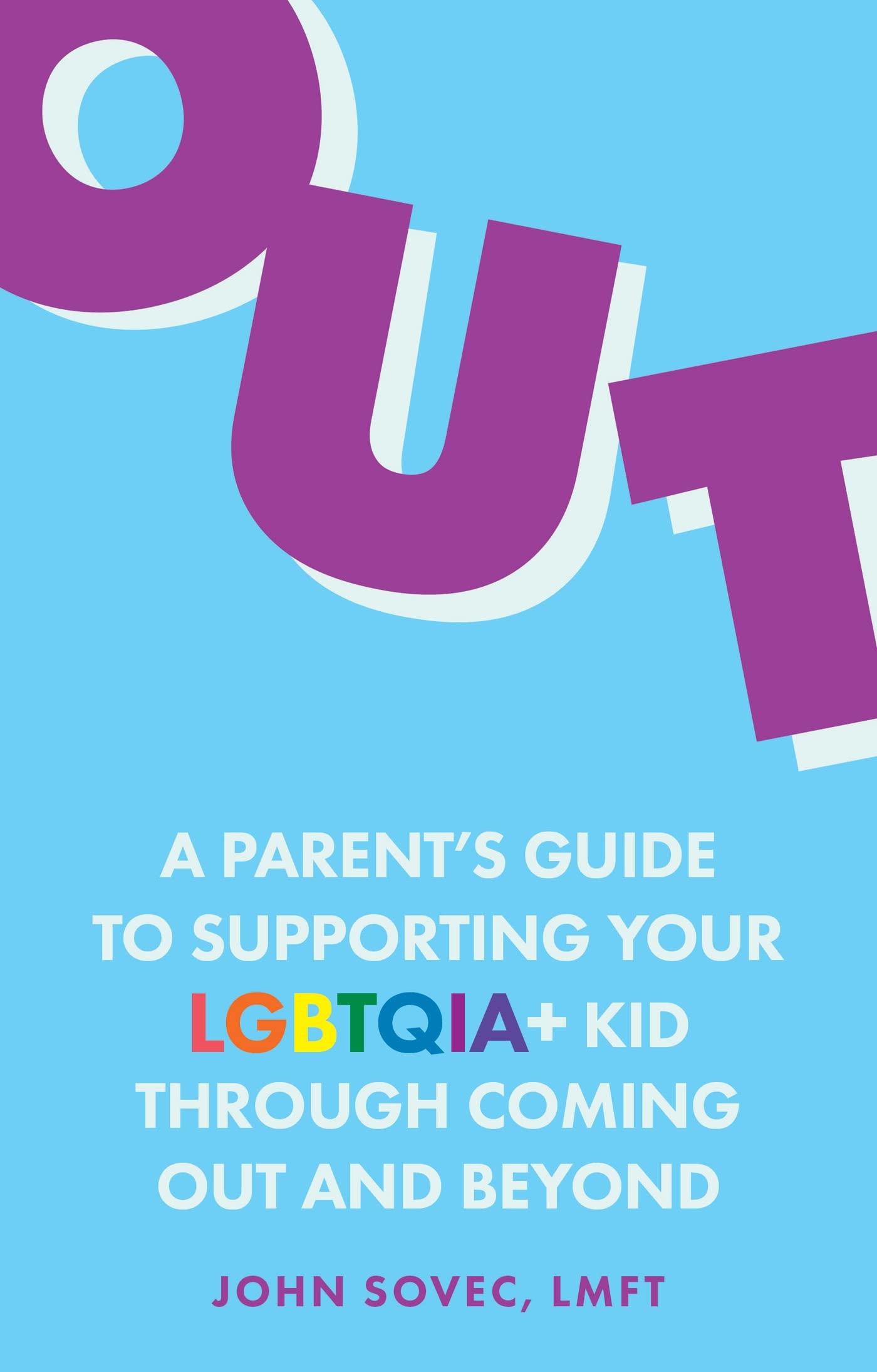
Out by John Sovec
|
For our June installment of The Pulse, we’re highlighting one of our favorite resources for supporting LGBTQIA+ youth and families: Out: A Parent’s Guide to Supporting Your LGBTQIA+ Kid Through Coming Out and Beyond by John Sovec, LMFT. This accessible and compassionate guide is a must-read not only for parents of LGBTQIA+ students, but for anyone who wants to better understand the lived experiences of LGBTQIA+ individuals and learn how to offer meaningful support. Sovec, a licensed therapist and longtime advocate, walks readers through the evolving language around identity, offers guidance on fostering open conversations, and addresses the journey of support well beyond the initial coming out moment.
|
|
|
|
What do we love about it?
|
We love Sovec’s warm, clear writing and the affirming, nonjudgmental way he helps families navigate unfamiliar territory. Each chapter ends with thoughtful “Questions for Contemplation,” encouraging readers to reflect, engage in deeper conversations, and grow alongside their loved ones. For gifted and twice-exceptional youth—who may already feel different—this book offers a powerful reminder of the importance of creating safe, supportive environments where they can be fully and authentically themselves. Out is not just a guide for parents; it’s a resource for anyone committed to allyship, inclusion, and building stronger, more affirming communities.
|
|
|
|
|
|
|
|
|
|
|
|
|
|
|
We are always seeking dedicated volunteers to help advance GiftedNYS's mission. Even 2-3 hours a month will have a meaningful and positive impact on our community. To learn more visit https://giftednys.org/get-involved/volunteer/.
|
|
|
|
|
|
|
If this newsletter was forwarded to you and you'd like to receive future GiftedNYS newsletters, advocacy updates, and information about interesting events, subscribe to our mailing list by visiting https://giftednys.org/about-us/newsletter/. Its quick and free to subscribe!
|
|
|
|
|
|
About GiftedNYS
|
|
Gifted New York State, Inc. (GiftedNYS), is a 501 (c) 3 not-for-profit organization of parents, educators, and professionals who have come together to support the needs of New York’s gifted and twice-exceptional (2E) student population and their families. To learn more about our work, visit us online at www.giftednys.org.
|
|
|
At GiftedNYS, the information we share is guided solely by our mission to support gifted and twice-exceptional learners—not by outside interests. If we mention resources, tools, or strategies, it's because we believe they may be helpful for families and educators. We do not receive compensation for these mentions and we do not endorse specific companies or products.
|
|
 
|
|
|
|