|
|
|
|

|
An inclusive community advocating for learners with gifted education needs, their families, and educators
|
|
|
|
|
|
|
Advocacy Corner
|
Join us for Gifted NYS Advocacy Day in Albany
|
|
|
Dear GiftedNYS Community,
|
As we head into the holiday season and Winter months, we recognize that changes in routine and added activities and social gatherings can be both a challenge and opportunity for gifted individuals. This month, our Perspectives Corner focuses on strategies for a successful holiday season for children and parents.
|
We also share a variety of opportunities for the new year, including our January 14th Virtual Meet Up, information on how to participate in Advocacy Day, upcoming Youth Opportunities as well as dates for our exciting four part series, Meeting the Moment Mindfully, for parents and caregivers to build curious and non-judgemental presence in challenging moments.
|
|
Wishing you all a peaceful holiday season,
|
|
|
|
|
Open to GiftedNYS Members Only
|
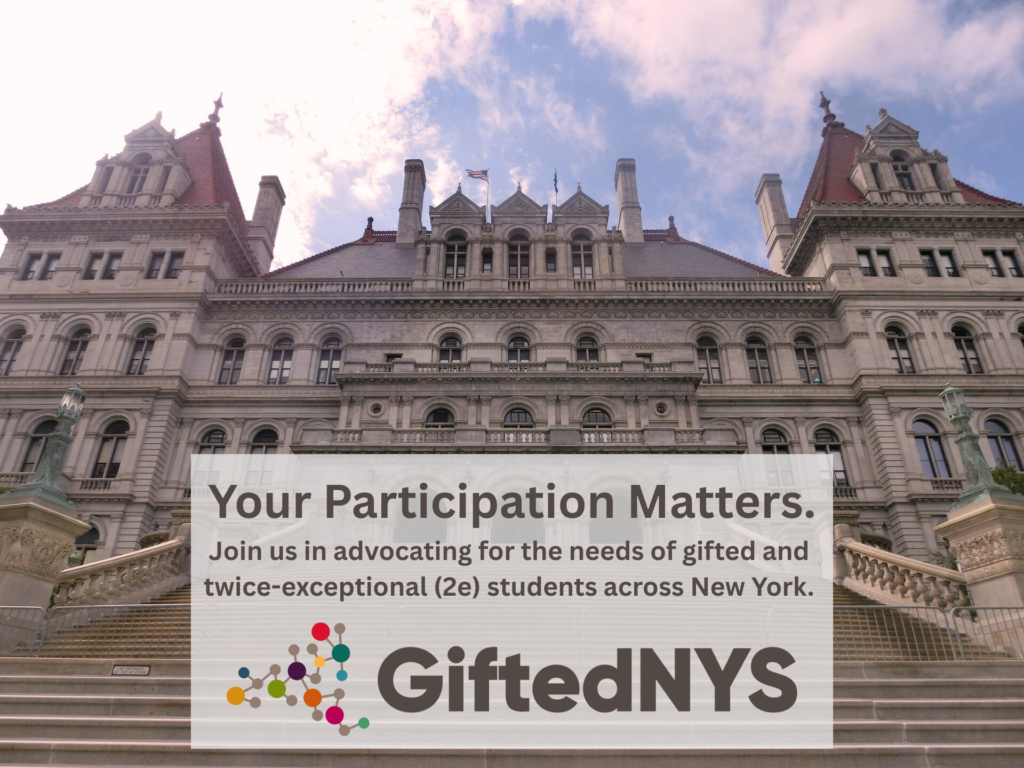
Gifted New York State is excited to announce our 2026 Advocacy Day at the New York State Capitol in Albany! This is a unique opportunity for our members to come together, meet with lawmakers, and speak with one voice about the needs of gifted and twice-exceptional (2e) students across New York. Your presence helps show legislators that gifted education matters in every region and every community.
|
|
New York State Capitol, Albany, NY
|
|
|
|
|
|
|
|
January Virtual Meet Up
|
|
Join us to connect with other families and educators throughout NYS who know learners with gifted education needs deserve equitable opportunities to excel.
|
|
|
|
|
|
|
|
Featured Events
|
Meeting the Moment Mindfully
March 2nd, 9th, 16th, and 23rd, 7-8:30pm ET
|
A four-part series to help parents and caregivers build curious, non-judgemental presence in challenging moments
|
Co-regulation has risen in awareness as an affirming approach for supporting children’s development and is widely recognized as a foundational way to help develop self-regulation. But even the best-intentioned parents sometimes have their own “big feelings.” What then? How do we remain anchored and support ourselves so that we don’t get lost in the rush of our own emotions and thoughts, and blow-up or shut-down when our kids need us the most?
|
Save the dates and plan to join GiftedNYS and mindfulness facilitator Amanda Christy to learn mindfulness-based practices that can help you strengthen your regulation skills, build a healthier relationship with life’s stressors, parent with presence, and ultimately meet the moment with mindfulness.
|
|
Keep an eye on your Inbox for registration and additional details in January!
|
|
|
|
|
|
Advocacy & Parenting Tips for the Holidays
|
|
By Dr. Sonu Aziz, Head of Academic Affairs, Long Island School For the Gifted
|
|
The holiday season brings a welcome break from school, and for many gifted children, it’s a
chance to rest, explore new interests, and reconnect as a family. At the same time, long
stretches without structure and increased social demands can be overwhelming. As a teacher
and gifted education specialist, I’m often asked how families can support their gifted child’s
needs during these weeks. Below are some practical tips—along with resources—to help you
navigate the weeks ahead.
|
|
Protect Time for Rest
Many gifted learners experience heightened sensitivities and intensities, which can lead to
emotional and mental fatigue. Some gifted children mask their exhaustion with constant
curiosity and activity. Building in intentional downtime gives their minds a chance to recharge
and supports emotional resetting. Consider adding a weekly slower-paced morning or setting
aside an afternoon with no expectations. Encourage activities that promote calm—reading,
sketching, nature walks, listening to music, or building quietly. Even high-energy students
benefit from intentional downtime!
|
Keep Routines Predictable Yet Flexible
While spontaneity is part of the holiday fun, gifted children—especially those who are sensitive
or experience intensities—tend to feel more regulated when expectations are clear. Try posting
a simple weekly schedule on the fridge to outline travel plans, gatherings, or special events. Use gentle transition cues - “Five more minutes to play”, to minimize stress. A balance of structured and unstructured days often works best. Even during holidays, light structure reduces anxiety and helps them transition between activities.
|
Support Social-Emotional Needs
Changes in schedule, large gatherings, and sensory overload can be challenging– for children
and adults alike! Have a plan in place. Set aside a place for an overstimulated child to go to if
they need quiet time during a party or large gathering. Have “quiet activities” on hand, such as
coloring pages or their favorite book. Briefly practicing greeting relatives or receiving gifts, or
reviewing the plans before an event, can also ease anxiety.
|
Encourage Passion Projects
Holiday breaks are ideal for deep dives into personal interests. Set aside time for independent
projects such as writing stories, coding, building, crafting, baking, or researching a topic of
fascination. Keep materials accessible and let your child take the lead. These experiences are
|
enriching without feeling academic and can help them re-engage with learning in January.
Interest-based learning is one of the most effective ways to engage gifted students during
breaks. They promote creativity, autonomy, and depth of understanding—without feeling like
extra schoolwork.
|
Advocate With Insight
Holiday time gives parents a clearer picture of how their child learns, reacts, and recharges. It’s
a natural opportunity to reflect on what’s working and what your child might need upon returning to school. Consider jotting down observations about learning preferences, stressors, or successes and sharing a few clear examples with teachers to strengthen the home–school
partnership and ensure your child is supported when they return to school in January.
|
Set Realistic Expectations
|
Remember that giftedness often comes with asynchronous development. A child who can
discuss complex concepts may still struggle with patience, social nuance, or emotional
regulation. Preview upcoming expectations and give choices when appropriate. Adjusting
expectations to match your child’s emotional age—not just their intellectual level—sets everyone up for success.
|
|
|
Recommended Resources for Families
|
Helping Gifted Children Soar - Sondra Ford, PhD, & Donna Ford, PhD
Raising Your Spirited Child - Mary Sheedy Kurcinka
The Essential Guidebook for Parents of Gifted Children - Jennifer Ault
Raisin' Brains: Surviving My Smart Family - Karen L.J. Isaacson
|
|
|
|
The Pulse
|
|
|
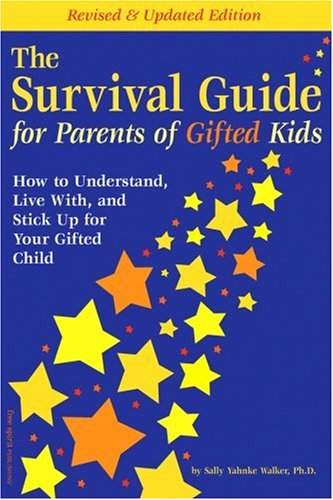
The Survival Guide for Parents of Gifted Kids
This practical guide is geared for parents to help them understand, support and advocate for their gifted children, including important topics like identification, perfectionism, overexcitability and navigating school systems.
|
What do we love about it?
|
We love the wide range of topics covered in this guide, beginning with a foundational overview explaining what gifted is and isn't as well as approaches to identification. With relatable stories, the author provides strategies for the unique challenges parents often experience living with a gifted child, from endless questions and high energy to asynchronous development and emotional maturity. Suggestions and resources are also provided for advocating for appropriate educational programming and opportunities at school.
|
|
|
|
|
|
Youth Opportunities
|
Davidson Institute Online Programs
Ages 5-18
Applications are open for several Davidson programs for gifted young people, including
Explore for middle school students and Young Scholars
|
New York Academy of Sciences
Age 13-17
The Junior Academy is an international network of high school students united by their
shared love for utilizing STEM to tackle real-world problems.
|
Emory University Pre-College Program
Grades 10 & 11
The Taste of College on campus summer academic program gives current sophomores
and juniors a glimpse of college academic and residential life. Choose from two-week
non-credit courses, or six-week college credit courses.
|
|
|
|
|
|
|
|
|
|
|
|
We are always seeking dedicated volunteers to help advance GiftedNYS's mission. Even 2-3 hours a month will have a meaningful and positive impact on our community.
|
|
|
|
|
|
|
If this newsletter was forwarded to you and you'd like to receive future GiftedNYS newsletters, advocacy updates, and information about interesting events, subscribe to our mailing list by visiting https://giftednys.org/about-us/newsletter/. Its quick and free to subscribe!
|
|
|
|
|
|
About GiftedNYS
|
|
Gifted New York State, Inc. (GiftedNYS), is a 501 (c) 3 not-for-profit organization of parents, educators, and professionals who have come together to support the needs of New York’s gifted and twice-exceptional (2E) student population and their families. To learn more about our work, visit us online at www.giftednys.org.
|
|
|
At GiftedNYS, the information we share is guided solely by our mission to support gifted and twice-exceptional learners—not by outside interests. If we mention resources, tools, or strategies, it's because we believe they may be helpful for families and educators. We do not receive compensation for these mentions and we do not endorse specific companies or products.
|
|
 
|
|
|
|